
Handbells Through History: A Resonant Journey Across Cultures
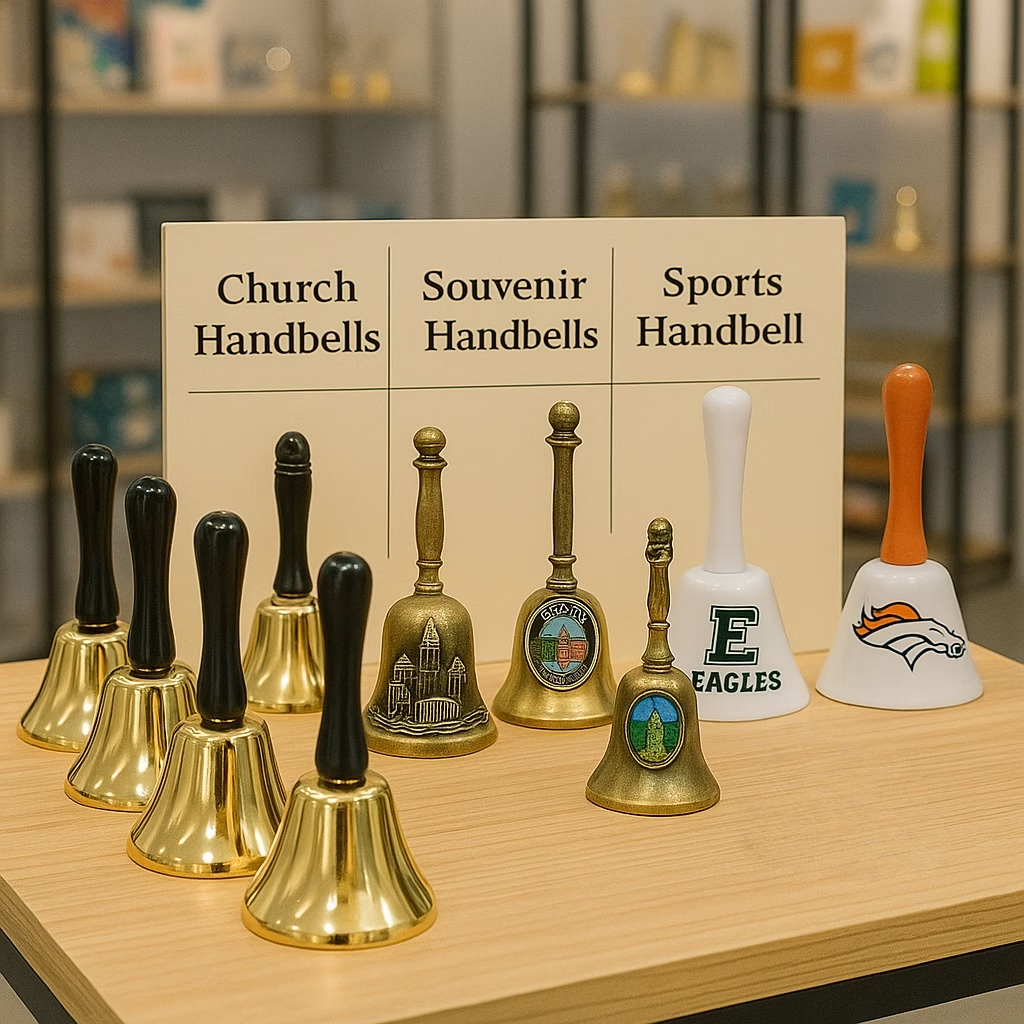
Handbells have echoed across centuries, continents, and communities. From their earliest bronze prototypes in ancient China to the tuned cast‑bronze sets of English change‑ringing, these compact instruments have long signaled ritual, community, and celebration. Their tonal clarity, portability, and symbolic resonance allow them to transcend contexts—from solemn church liturgies to raucous sports arenas, and from refined concert halls to bustling classrooms.
Early Beginnings and Sacred Significance
Archaeologists trace small handheld bells back at least 3,000 years. In ancient temples, priests rang bells to invite deities or mark ceremonial transitions. Medieval Europe refined the art: hardened bell‑metal—an alloy of copper and tin—was cast into precise profiles, producing richer overtones and longer sustain. Monasteries assigned handbells to mark canonical hours, while towns adopted them for civic alerts.
Evolution into Tuned Sets
By the 17th century, English founders like the Whitechapel Bell Foundry developed the first chromatically tuned handbell sets, enabling “change‑ringers” to practice intricate bell peals indoors. This innovation laid the foundation for modern handbell choirs, which today encompass liturgical ensembles, school groups, and professional touring companies.

Why Handbells Resonate Today: Five Core Qualities
Sonic Clarity: A handbell’s partials align in near‑perfect harmonic series, delivering pure, penetrating tones that cut through ambient noise—ideal for large congregations or packed arenas.
Portability: A 37‑bell, three‑octave choir weighs under 60 kg, making it exponentially easier to transport than—orchestral tubular bells.
Visual Appeal: The polished bronze, graceful swing, and choreographed technique create a captivating stage presence.
Accessibility: Players of varied ages can quickly master basic ringing motion, fostering community engagement.
Symbolism: Bells embody announcement, celebration, and unity—universally understood across cultures.
Liturgical Soundscapes: Handbells in Churches and Cathedrals
Anchoring the Liturgy
In Catholic, Anglican, Orthodox, and many Protestant traditions, handbells punctuate rites:
Sanctus Bells: Small handbells signal the Eucharistic prayer’s most sacred moments.
Processional Peals: Festal entrances often feature handbell choirs leading clergy down the nave.
Advent & Christmas: Carols like “Carol of the Bells” spotlight bell timbres, and Midnight Mass often premieres new bell arrangements.
Educational Ministry and Volunteer Engagement
Churches leverage handbell programs to involve congregants who might not read standard notation. Color‑coded charts or numbered handles simplify music literacy, nurturing intergenerational fellowship.
Acoustic Considerations for Sacred Spaces
Stone vaults amplify overtones, so choirs may damp ringers with felt‑lined tables and employ soft-malleted techniques for meditation moments.
Academic & Pedagogical Impact: Handbells in Schools and Universities
Musical Literacy and Teamwork
Because each performer controls only two to four notes, handbell ringing teaches individual accountability within collective artistry. Students internalize rhythm, cue‑reading, and cooperative timing—crucial skills transferable to orchestras, bands, and even corporate teamwork.
STEM Integration
Physics classes analyze waveforms and resonance; engineering departments design 3‑D‑printed handles or dampening systems, merging art with applied science.
Accessible Adaptations
Color‑coded plastic bells tuned to diatonic scales enable early‑childhood classrooms to explore pitch relationships through play‑based learning.
Corporate, Civic, and Therapeutic Contexts
Brand Activation & Experiential Marketing
Handbell flash mobs at mall openings or holiday markets deliver Instagram‑friendly spectacles. Brands commission custom‑logo bells as souvenirs, embedding marketing in multisensory memory.
Music Therapy and Wellness
The bell’s tactile vibration and immediate feedback support sensory integration therapy. Senior‑living facilities report improved motor coordination and mood among residents participating in weekly bell circles.
From Sidelines to Stadiums: Handbells in Sports Arenas
Rallying the Crowd
In North American hockey, cowbells and handbells energize fans and intimidate visiting teams. European football ultras integrate bells into rhythmic chants, creating seismic fan sections.
Compliance and Customization
Many arenas restrict air horns but allow handheld bells under decibel thresholds. Custom‑tuned aluminum handbells with padded clappers meet noise‑code criteria while still delivering field‑level audibility.
Merchandising Opportunities
Teams imprint mascots and slogans on bell handles, upselling as limited‑edition game‑day merchandise.
Concert & Recording Applications
Contemporary Composers and Crossover Genres
Works by composers like Joan Tower, Eric Whitacre, and Kevin McKee incorporate handbells for shimmering textures. Indie bands sample bell choirs for atmospheric intros, while film scorers layer bells to evoke nostalgia or suspense.
Microphone Techniques
Engineers favor ribbon mics overhead for warmth, combined with cardioid spots for articulation. De‑ringing pads on tables minimize mechanical noise.
What Sets Professional Handbells Apart?
Bell Bronze Formula and Casting Precision
True bell bronze—78% copper, 22% tin—yields optimum hardness and acoustic brilliance. Precision sand casting followed by lathe‑tuning to ±1 cent ensures pitch stability across climates.
Handle Ergonomics & Clapper Design
High‑grade polymer handles resist UV and sweat degradation. Spring‑mounted clappers with adjustable restraining springs allow ringers to tailor strike force, crucial for dynamic control.
Protective Finishes
Clear baked lacquer preserves luster while preventing oxidation—a decisive factor for rental fleets enduring frequent transit.

Our Commitment to Excellence
At QUANZHOU NUOJIE LIGHT INDUSTRY CO. LTD, we bring many years of experience in crafting bells for liturgical, educational, and entertainment uses. Our facility integrates CNC machining, artisanal hand‑tuning, and ISO‑certified quality controls.
Range: 25‑ 61‑bell chromatic sets, single‑note desk bells, and rugged sports bells.
Customization: Logo engraving, custom powder‑coat colors, and ergonomic handle molds.
Logistics: Global freight partnerships and drop‑ship programs for distributors.
Whether outfitting a cathedral choir or outfitting a stadium fan store, we stand as your reliable bell partner.
Maintenance & Longevity: Caring for Your Investment
Cleaning Protocols
Wipe with lint‑free cloth after each use; avoid acidic polishes that strip lacquer. For bronze patina restoration, use a neutral pH cleaner followed by micro‑crystalline wax.
Storage Solutions
Padded cases with individual bell slots prevent clapper swing damage. Climate‑controlled rooms (18‑24 °C, 40‑50% humidity) protect against metal fatigue and wood‑core handle warping.
Periodic Retuning
Professional ensembles recalibrate every 7‑10 years. Our factory offers retuning services using original pitch charts archived by serial number.
Global Market Insights: Demand Drivers & Growth Segments
Post‑Pandemic Revival of Live Events
Concert halls and sports arenas have rebounded, heightening demand for audience‑participation instruments. Handbell wholesalers report a 23% CAGR since 2022.*
E‑commerce & Personalization
Etsy and Amazon Handmade show rising searches for “custom handbells” and “wedding exit bells,” indicating DIY and boutique niches.
Sustainability Trends
Bells crafted from recycled metals align with eco‑friendly procurement policies in schools and municipalities.
Case Studies: Versatility in Action
1. St. Anne’s Cathedral, Dublin
Installed a five‑octave set for their Advent Lessons & Carols series. Attendance grew 18% after launching social‑media teasers featuring rehearsal snippets.
2. Alpine Thunder Hockey Club, Colorado
Commissioned 10,000 lightweight aluminum handbells with rubber clappers—sold out within two home games and generated six‑figure merchandise revenue.
3. Harmony Hands Music Therapy, Tokyo
Uses chromatic desk bells for stroke‑rehabilitation sessions, citing measurable gains in patient fine‑motor skills over eight‑week programs.
Ringing in Opportunity Across Sectors
Handbells have evolved from sacred signals to versatile tools for education, entertainment, wellness, and community identity. Their clear tones cut through noise both literal and figurative, uniting performers and audiences in shared experience. As demand diversifies—spanning churches, schools, marketing events, and sports stadiums—quality manufacturing and responsive supply chains become paramount.
We at QUANZHOU NUOJIE LIGHT INDUSTRY CO. LTD remain committed to delivering precision‑tuned handbells that honor tradition while meeting modern performance and branding needs. Explore our catalog, collaborate on custom designs, and let’s resonate together across the world’s stages and stands.
FAQs
1. Can you customize handbells with school or team logos?
Yes. As a factory, we offer laser engraving, UV printing, and full‑color decal applications to align with institutional branding guidelines.
2. What is your minimum order quantity (MOQ) for bulk sports‑arena bells?
Our standard MOQ is 500 units for aluminum handbells, but we provide tiered pricing for larger stadium orders exceeding 5,000 pieces.
3. How do you ensure pitch accuracy in large production runs?
Every bell passes dual‑phase digital strobe tuning, and random batch samples undergo spectral analysis to verify ±1 cent tolerance.
4. Do you ship globally and handle customs paperwork?
Absolutely. We offer DDP (Delivered Duty Paid) options to major ports and include all necessary certifications—CE, CPSIA, and RoHS—depending on destination.
5. What sustainable materials do you use for eco‑focused clients?
We source recycled brass and offer bamboo‑fiber handles treated with non‑VOC sealants, aligning with green‑procurement standards.